
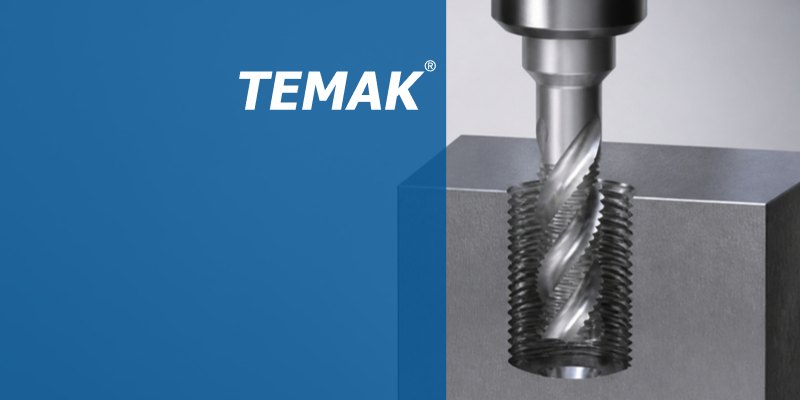
In machining, taps are used for internal threading of detachable and re-fittable fastening elements. Choosing the right tap type for the material and manufacturing method extends tool life and improves thread quality.
In this article, guided by Temak Teknik, we examine the types of taps, their applications, tap substrate materials and coating properties.
1. Types of Taps by Working Principle
Hand Taps (Set of 3)
Tools made from HSS, generally used in manual applications:
- No. 1 Tap (Single Ring) – Taper: Has a long chamfer and taper and is used to start the thread.
- No. 2 Tap (Double Ring) – Intermediate: The intermediate tap that deepens the thread profile.
- No. 3 Tap (No Ring) – Bottoming: The finishing tap that sizes the thread and completes the tapping operation.
Machine Taps
- Straight Flute Taps: Preferred for through holes (open-ended holes).
- Straight Flute Type: Collects the chips in the centre of the flutes.
- Spiral Point (Gun Nose) Type: Pushes the chips straight ahead and down.
- Spiral Flute Taps: Because they evacuate chips upwards instead of pushing them down, they can be used reliably in blind holes (closed holes) as well as through holes.
- Forming (Roll) Taps: Produce the thread form by displacing the material without removing chips. Preferred in the series production of soft materials such as copper, aluminium and brass.
- Interrupted Thread Taps: Feature alternate teeth removed from the thread. Used in soft materials such as polyamide or aluminium and for fine threads to increase strength.
2. Tap Substrate Materials
Taps have different substrate compositions depending on the hardness of the workpiece and the operating conditions:
- HSS (High-Speed Steel): Commonly preferred, generally for hand taps.
- HSS-E (5% Cobalt): The most common type for machine taps. Its cobalt content provides wear resistance and high heat resistance.
- HSS-M (PM / Powder Metallurgy): Provides long tool life in difficult materials such as nickel alloys, stainless steel and titanium.
- HSS-E V3: Delivers outstanding performance when tapping high-hardness materials.
3. Coatings and Colour Codes
- Coated Taps: Although the initial purchase cost may seem high, the lubricity, high wear resistance and long tool life they provide significantly reduce the total manufacturing cost.
- Colour Codes: Manufacturers add colour codes such as blue, red, black or yellow to tap shanks to indicate the material group the tap is suited to, its coating type and its application.